
Most of your accessibility issues are really a handful of fixes.
We crawl your, testing every page against WCAG 2.1 AA, then run the results through our own ADA compliance matrix. That’s what a raw scanner can’t do: groups thousands of individual flags into a handful of root causes and separates template-level problems from one-off content. An automated tool might report 100s of issues; where a single structural change, one alt-text pass, one contrast token, clearing hundreds of instances at once.
Request an accessibility audit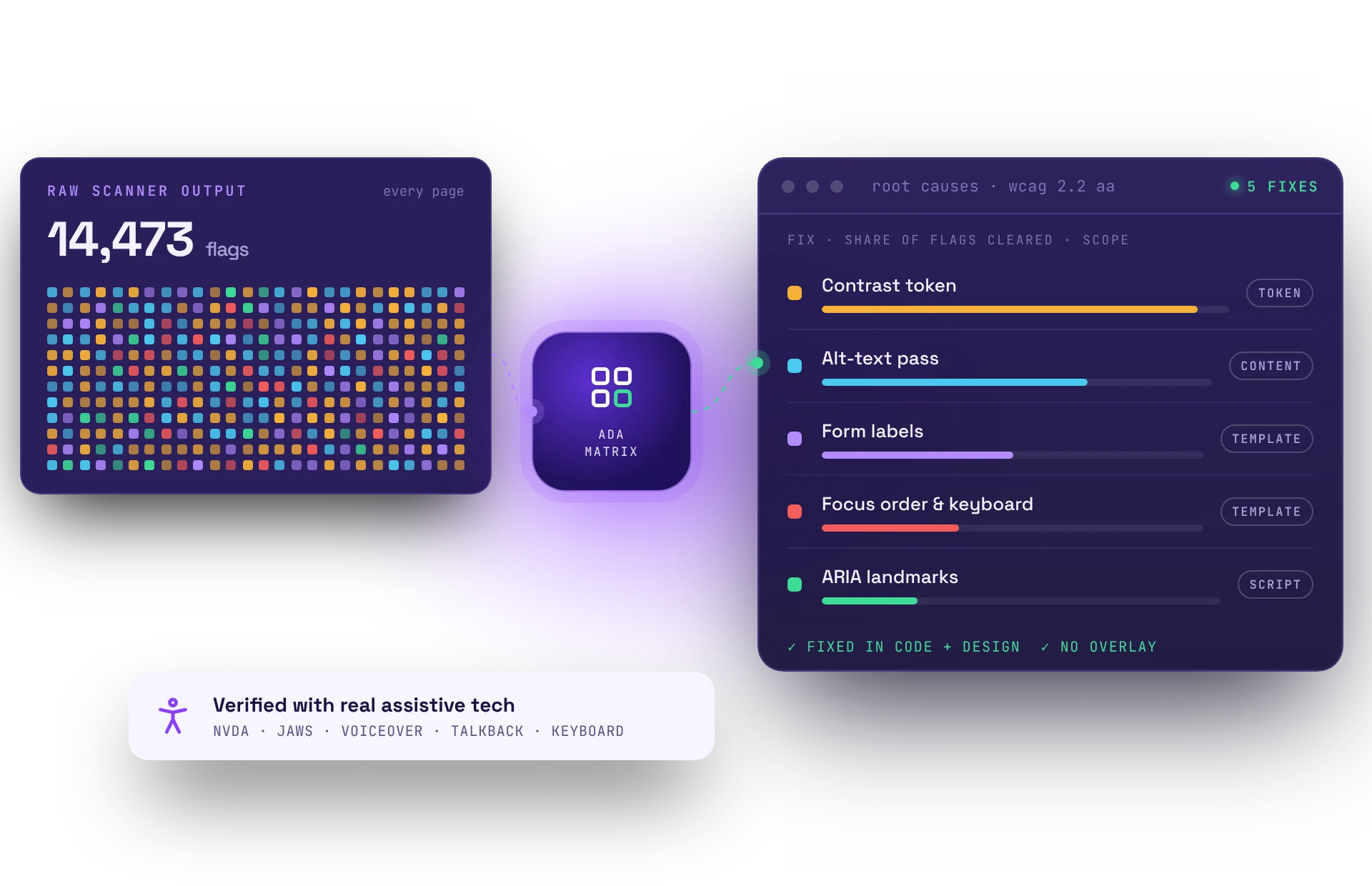
Coverage across the accessibility standards that carry legal weight
WCAG 2.1 & 2.2 AA
The technical standard nearly every accessibility claim measures against. We audit against the full 2.1 and 2.2 AA success criteria and fix what fails, not just what an automated tool can see.
ADA Title II (public entities)
The DOJ's 2024 web rule sets WCAG 2.1 AA as the standard for state and local government sites, with compliance due April 2026 for larger entities and April 2027 for smaller ones. We get public-sector teams there in time.
ADA Title III (private business)
Most web accessibility lawsuits target private businesses under Title III, where courts routinely treat WCAG AA as the benchmark. We reduce that exposure with real fixes, not an overlay widget.
Section 508 (federal)
Federal agencies and their vendors must meet Section 508, which adopts WCAG AA. We test against it and produce the conformance documentation procurement teams ask for.
EN 301 549 & the European Accessibility Act
The European Accessibility Act applies to many products and services sold into the EU as of June 2025, referencing the EN 301 549 standard. We map your obligations if you serve European users.
AODA (Ontario)
Ontario's accessibility law requires WCAG 2.0 AA for many organizations' websites and content. If you operate in Ontario, we scope and remediate against it.
Rigorous ADA 2.1 WCAG accessibility testing methods
Automated scanning (axe-core)
Rules-based scans that catch machine-detectable failures fast
WAVE evaluation
Visual page checks that surface structure and contrast issues
Lighthouse audits
Accessibility scoring folded into performance and best-practice runs
Pa11y CI
Automated checks wired into your build to catch regressions
Manual expert audit
A human reviewer testing what tools simply cannot
Screen-reader testing (NVDA)
Real listening passes through the most-used Windows screen reader
Screen-reader testing (JAWS)
Verifying the enterprise screen reader many users still rely on
VoiceOver / mobile (iOS)
Testing the built-in reader on iPhone and iPad
TalkBack (Android)
Confirming your mobile experience works for Android users
Keyboard-only navigation
Every action reachable and visible without a mouse
Color-contrast analysis
Text and interface contrast measured against AA thresholds
Cognitive & readability review
Plain-language and clarity checks for cognitive accessibility
Not sure how exposed your site is right now?
We run the same automated and manual checks a plaintiff's firm would, then come back with the barriers that put you at risk, missing alt text, keyboard traps, unlabeled controls, contrast failures, and which ones matter most.
Request an accessibility exposure check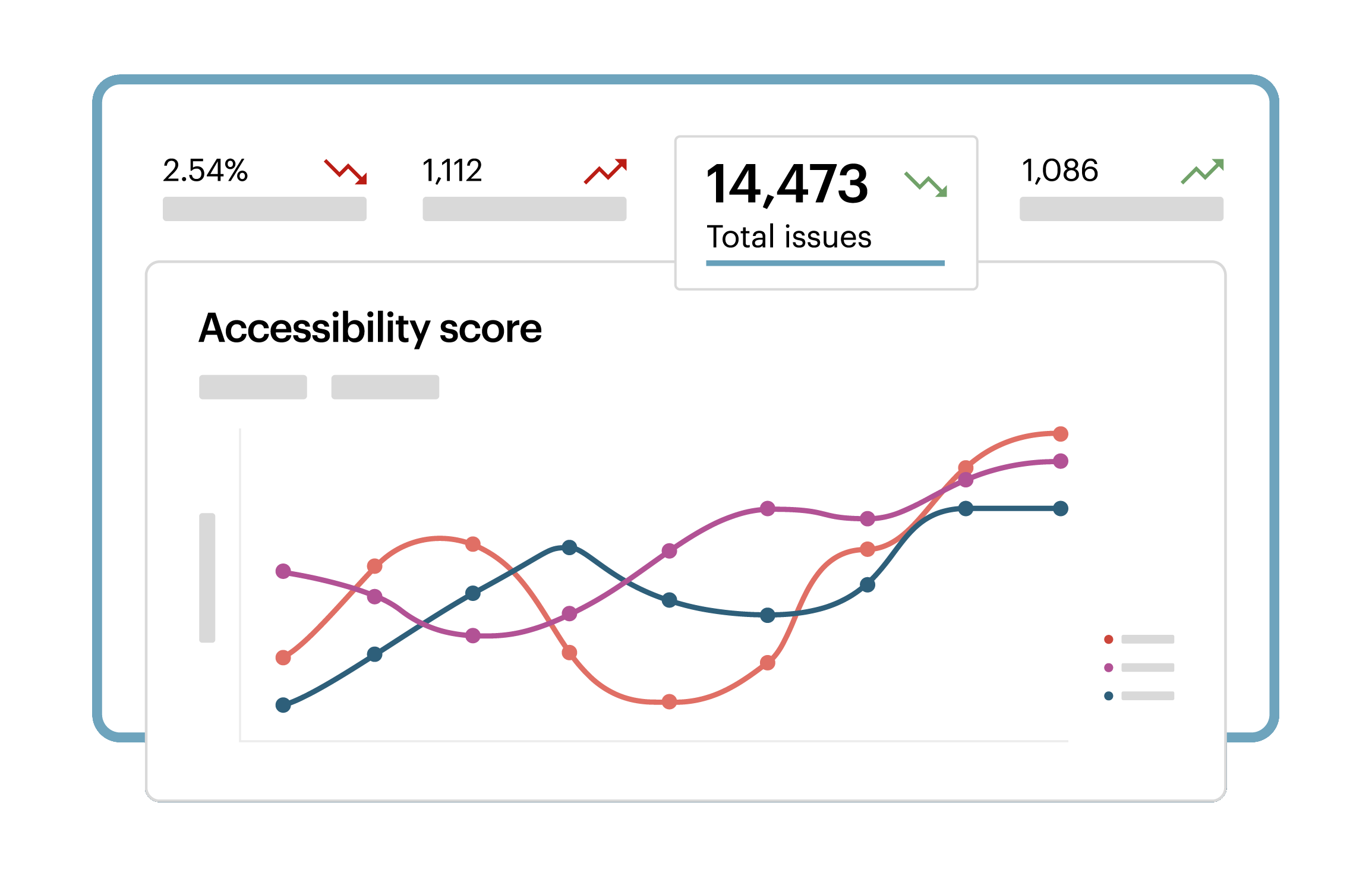
How we work
Audit against real standards
We test against the WCAG success criteria courts and regulators actually cite, combining automated scans with manual and assistive-technology passes so nothing hides behind a green score.
Remediate code and design
We fix the findings in the codebase and the design system: markup, ARIA, focus order, contrast, and components, so the improvements are real and durable, not a widget painted over the problem.
Monitor and prevent regression
We wire accessibility checks into your build and re-test on a schedule, so new pages and releases stay accessible instead of quietly drifting back out of compliance.
Five ways we make your site accessible
Accessibility audit (WCAG 2.2 AA)
A full audit against WCAG 2.2 AA that pairs automated scanning with hands-on manual and assistive-technology testing. You get a prioritized findings report tied to specific success criteria, not a raw tool dump.
Code & design remediation
We fix what the audit finds, in the code and in the design: semantic markup, ARIA, focus order, contrast, and accessible components. Real remediation your team can ship, never an overlay widget.
Assistive-technology & manual testing
Testing with NVDA, JAWS, VoiceOver, TalkBack, and keyboard-only navigation, so you know how real assistive-technology users actually experience your site, the failures automated tools never catch.
Custom accessibility scripts & automation
When a fix is best applied site-wide, we write custom scripts that patch live pages< correcting ARIA landmarks and other structural gaps, and wire accessibility checks into your build so regressions get caught early.
VPAT, documentation & ongoing monitoring
Conformance documentation and VPAT / accessibility statements your procurement and legal teams can use, plus scheduled re-testing that catches new barriers before a user or a plaintiff does.
agency 39A CASE STUDY

Agency 39A led CLSI’s end-to-end digital transformation — one strategy uniting a rebuilt Umbraco CMS, HubSpot CRM and marketing automation, NetForum integration, and the new myCLSI member experience. Six months in: subscription traffic up 145%, embedded CTAs converting at 48%, and site search engagement up 70%.
View Case Study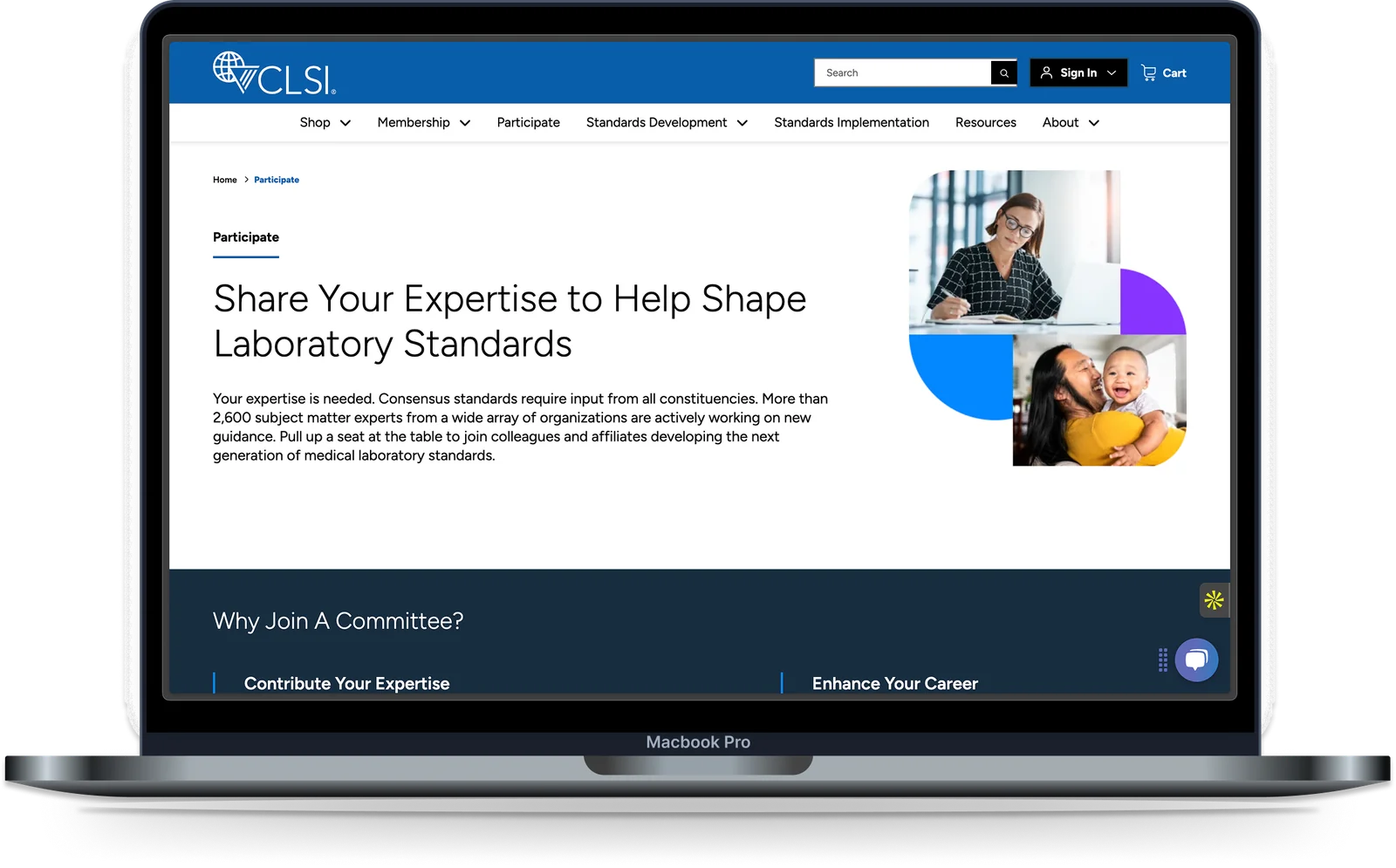
Let's talk
Meet our team, ask questions, and get the answers you need to move forward and improve your digital strategy.
What our clients say
“Agency 39A’s expertise in design and development - paired with their strong understanding of the healthcare industry - has made them a perfect fit partner for San Ysidro Health. The team is professional, responsive, knowledgeable, and kind. With their help, we’ve revolutionized our digital presence for patients and are already seeing the benefits!”
Brett
/
San Ysidro Health

Is your website ADA compliant?
Is my website automatically ADA compliant if it looks accessible?
No. Accessibility is measured against WCAG success criteria covering keyboard use, contrast, structure, and screen-reader support, much of which is invisible in a visual review. We test against WCAG 2.1 AA and remediate what fails rather than assume.
Does SOC 2 mean our website is ADA compliant?
No. SOC 2 covers the protection of your internal systems and data. ADA accessibility is digital compliance: it protects the right of everyone who visits your website to use it fully, regardless of ability. The two are different obligations, and a SOC 2 report says nothing about whether your site meets WCAG or the ADA.
How long does accessibility remediation take?
Most of the risk sits in a handful of recurring issues, so a focused round of fixes moves the needle quickly. Full conformance depends on site size and complexity. We prioritize the high-exposure items first, then work down the list.
Do accessibility overlay widgets make my site compliant?
No. Overlay and accessibility widgets do not fix the underlying code, and plaintiffs' firms increasingly name sites that rely on them. We remediate the actual markup and design instead.
What does the ADA require for websites?
The ADA itself does not list technical rules, but courts, settlements, and the DOJ treat WCAG 2.1/2.2 AA as the measure. Title II covers public entities, Title III covers private businesses open to the public. We test against the criteria that carry legal weight.
Is my website ADA compliant?
There is no certificate, but the working standard U.S. courts and the DOJ's 2024 web rule apply is WCAG 2.1/2.2 AA. If your site meets those success criteria, in code and in design, you are in strong shape. An audit tells you where you actually stand.